
Purple Toothpaste: Does It Really Whiten Teeth or Is It Just an Optical Illusion?
Purple toothpaste has taken over social media, promising instant whiter teeth with just one brush. But does purple toothpaste actually whiten teeth — or does it simply change how your teeth look?
As a dentist with over 10 years of clinical experience, I’ve seen many whitening trends come and go. In this article, we’ll break down why purple toothpaste was invented, how blue covarine works, its advantages and disadvantages, and how it compares to other whitening ingredients such as charcoal, hydrogen peroxide, and microbeads — all backed by science.
👉 If you want to understand how true whitening works at a chemical level, I recommend first reading our article on [How Does Teeth Whitening Work?] .
Why Was Purple Toothpaste Invented?
Purple toothpaste was created to offer instant cosmetic whitening without bleaching.
Traditional whitening methods take time, may cause sensitivity, and require consistent use. Blue covarine toothpastes were developed to give an immediate visual improvement, even if the effect is temporary.
What Is Blue Covarine?
Blue covarine is an optical pigment, not a bleaching agent. It was originally used in fabric detergents to counteract yellow tones and later adapted for oral care.
When applied to teeth, blue covarine forms a thin blue film on the enamel, altering how light reflects off the surface. Because blue neutralises yellow on the colour spectrum, teeth appear whiter instantly.
This is the same principle used in:
- Purple shampoo for blonde hair
- Colour-correcting makeup
How Does Purple Toothpaste Work
Purple toothpaste works through optical colour correction, not chemical whitening.
Color correcting wheel!!! Opposite colors cancel each other.
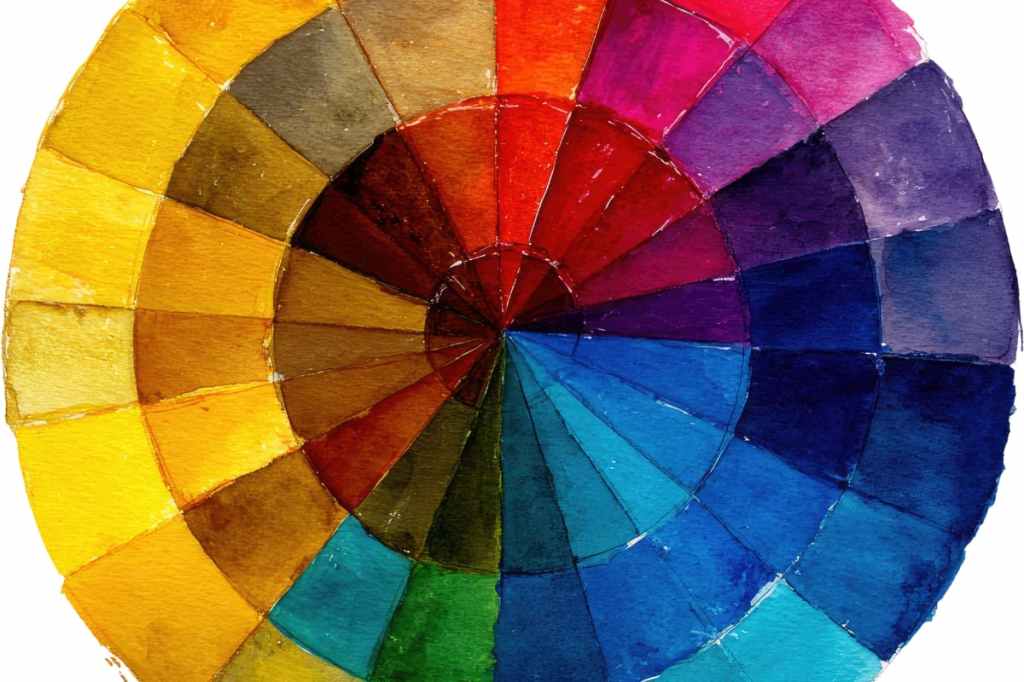
The Optical Effect Explained
- Teeth naturally reflect yellow tones.
- Blue covarine shifts this yellow reflection toward blue
- The result is an instant brightness boost
However, the pigment:
- Sits only on the enamel surface
- Wears off after eating, drinking, or brushing
- Does not penetrate the tooth structure
This is very different from peroxide whitening, which alters tooth colour internally. (Explained in detail in our article on [the science behind teeth whitening].)
Is Purple Toothpaste Actually Effective?
Yes — but only cosmetically and temporarily
Clinical studies show that blue covarine toothpaste can provide a visible whitening effect after a single brushing, especially when teeth have yellow surface staining. However, it does not change intrinsic tooth colour and does not bleach enamel.
What Purple Toothpaste Can Do
- Immediate improvement in tooth brightness
- Visually neutralise yellow tones
- Useful for short-term cosmetic enhancement
What It Cannot Do
- Whiten teeth permanently
- Remove intrinsic stains
- Replace professional or at-home bleaching
- Think of purple toothpaste as a filter, not a treatment.
Disadvantages of Purple Toothpaste
Despite the hype, purple toothpaste has several important limitations:
1. Temporary Results
Once the blue covarine layer is removed, teeth return to their original shade.
2. No True Whitening
If your teeth are dark due to genetics, ageing, medications, or internal staining, purple toothpaste will not make them whiter in the long term.
3. Marketing Can Be Misleading
Many products are marketed as “whitening,” which can confuse consumers who expect the same results as peroxide-based systems.
Effects on Teeth That Are Already Bleached
A common question I hear in clinic is:
“Can purple toothpaste make my already whitened teeth even whiter?”
What the Evidence Shows
- Blue covarine does not enhance the bleaching effect
- It does not increase long-term whiteness
- Any improvement is visual and short-lived
In previously bleached teeth, yellow tones are already reduced, so the optical effect of blue covarine is minimal and sometimes unnoticeable.
Purple Toothpaste and Composite Bonding or Restorations
This is one of the most important points — and one rarely discussed online.
What Happens If You Have Composite Bonding?
Composite resin, veneers, and crowns:
- Do not absorb blue covarine
- Do not change colour
- Remain the same shade while enamel appears brighter
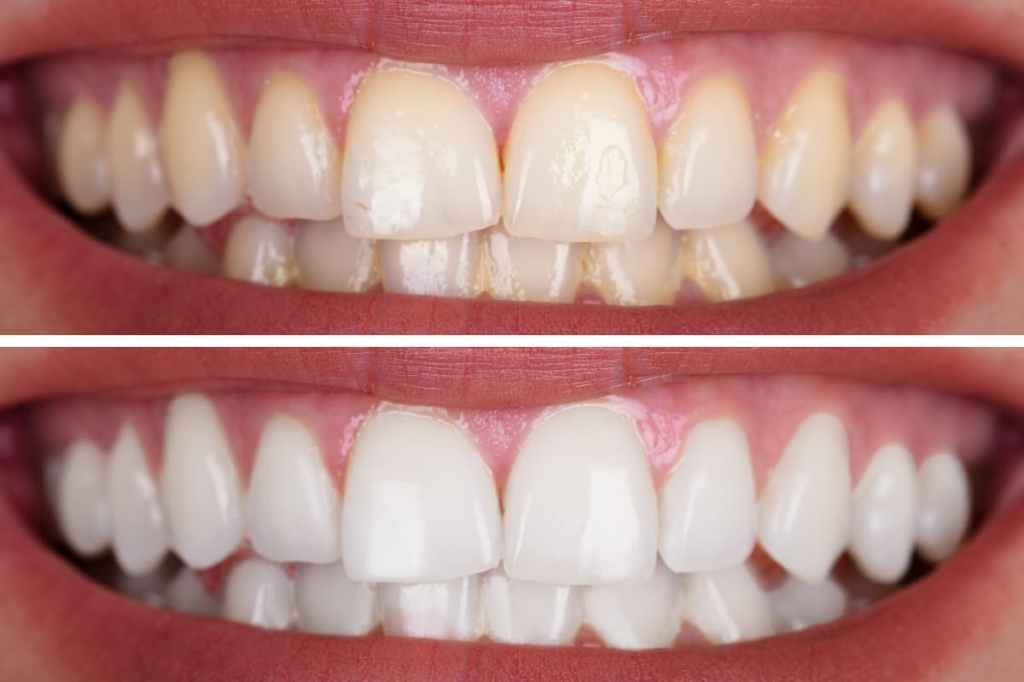
This can cause:
- Colour mismatch
- Restorations appearing darker or more visible
- A less harmonious smile
Scientific studies confirm that blue covarine may alter the appearance of natural enamel but does not whiten restorative materials, which is crucial for patients with bonding on front teeth.
Purple Toothpaste vs Other Whitening Ingredients
Let’s compare purple toothpaste to other popular whitening technologies.
🟣 Blue Covarine (Purple Toothpaste)
- Mechanism: Optical colour correction
- Speed: Instant
- Duration: Temporary
- Best for: Cosmetic brightness boost
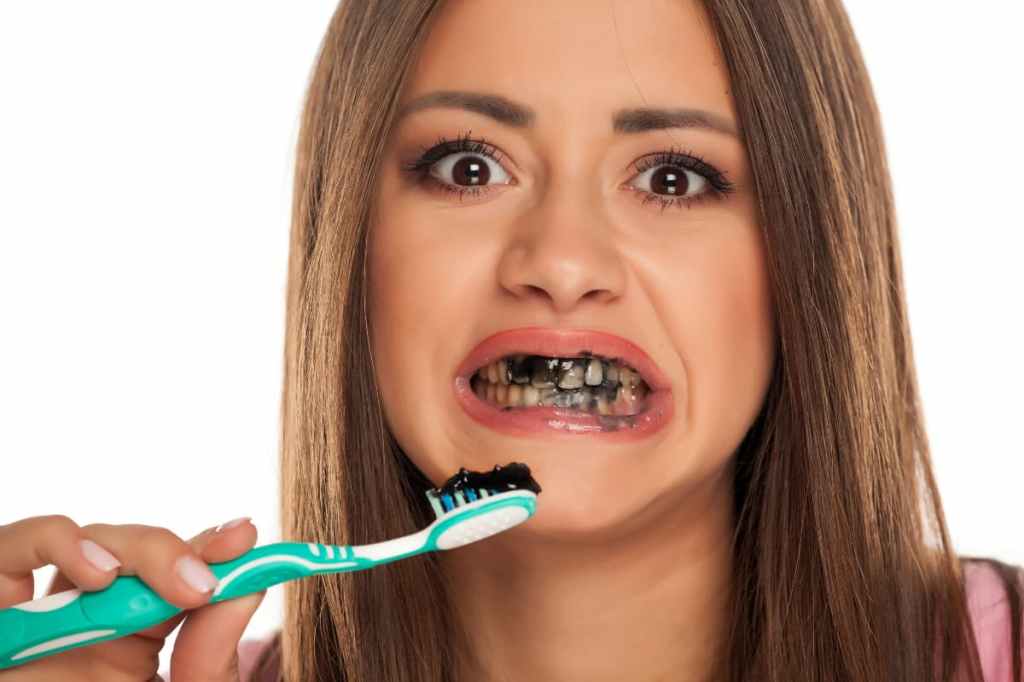
⚫ Activated Charcoal
- Mechanism: Abrasive stain removal
- Effectiveness: Limited
- Risk: Enamel wear with prolonged use
We cover this in detail in our article Activated Charcoal for Teeth Whitening: Does It Really Work?.
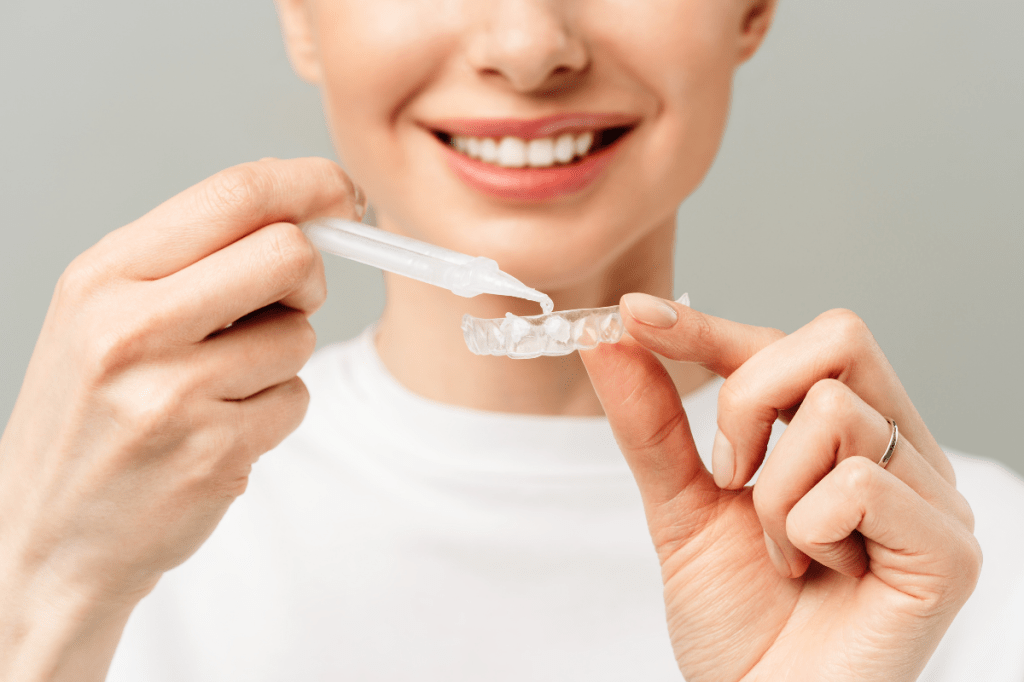
⚪ Hydrogen Peroxide
- Mechanism: Chemical bleaching
- Speed: Gradual
- Effectiveness: True whitening
- Risk: Sensitivity if misused
(Explained step by step in How Does Teeth Whitening Work?)
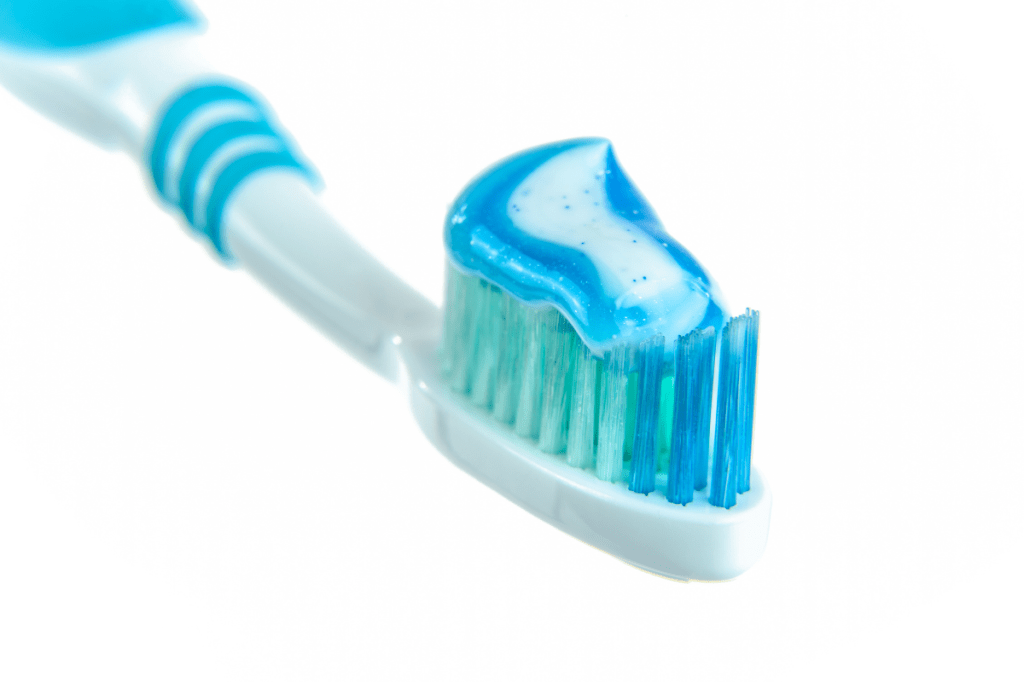
⚪ Microbeads / Optimised Abrasives
- Mechanism: Mechanical polishing
- Effectiveness: Surface stain removal
- Risk: Surface wear if overly abrasive
Clinical comparisons show that:
- Microbeads and blue covarine give the fastest visible results
- Hydrogen peroxide provides the most meaningful long-term whitening
Who Should Use Purple Toothpaste?
Good Candidates
- Mild yellow staining
- Coffee or tea drinkers
- Whitening maintenance (not treatment)
- Occasional cosmetic enhancement
Not Ideal For
- Patients with composite bonding on front teeth
- Those expecting permanent whitening
- Severe or intrinsic discolouration
How to Use Purple Toothpaste Correctly
- Use it as a supplement, not your main whitening method
- Combine with a solid daily oral hygiene routine
- Avoid overuse if you have restorations
- Don’t rely on it instead of professional advice
For sustainable whitening, understanding how whitening actually works is essential — which is why I always recommend reading How Does Teeth Whitening Work? before choosing any product.
Final Verdict: Is Purple Toothpaste Worth It?
Purple toothpaste is not a scam, but it is often misunderstood.
It does not whiten teeth — it changes how they look.
Used correctly, it can be a helpful cosmetic tool. Used incorrectly, it can lead to disappointment, uneven colour, or unrealistic expectations.
If your goal is long-term whitening, peroxide-based treatments under professional guidance remain the gold standard.
Reference
- Vaz, V. T. P., Jubilato, D. P., Oliveira, M. R. M., Bortolatto, J. F., Floros, M. C., Dantas, A. A., & Oliveira-Junior, O. (2019). Whitening toothpaste containing activated charcoal, blue covarine, hydrogen peroxide or microbeads: Which one is the most effective? Journal of Applied Oral Science, 27, e20180051. https://doi.org/10.1590/1678-7757-2018-0051
- Kim, S., Chung, S. H., Yamaguchi, S., Arima, T., & Park, Y.-S. (2026). Current evidence on the impact of whitening toothpastes on dental restorative materials: A comprehensive review. Journal of Prosthodontic Research, 70(1), 4–16. https://doi.org/10.2186/jpr.JPR_D_24_00283
- Zhang, L., Joiner, A., Gupta, A. K., Barili, M., Platten, S., McDonald, M. D., Luo, W., & Matheson, J. R. (2025). Effect of blue covarine toothpastes on tooth colour: A randomised crossover study. International Dental Journal, 75(5), 100938. https://doi.org/10.1016/j.identj.2025.100938
- Bortolatto, J. F., Rached Dantas, A. A., Roncolato, Á., Merchan, H., Floros, M. C., Kuga, M. C., & Oliveira Júnior, O. B. (2016). Does a toothpaste containing blue covarine have any effect on bleached teeth? An in vitro, randomized and blinded study. Brazilian Oral Research, 30(1), 1–7. https://doi.org/10.1590/1807-3107BOR-2016.vol30.0033
- Shamel, M., Al-Ankily, M. M., & Bakr, M. M. (2019). Influence of different types of whitening tooth pastes on the tooth color, enamel surface roughness and enamel morphology of human teeth [version 1; peer review: 3 approved]. F1000Research, 8, 1764. https://doi.org/10.12688/f1000research.20811.1
 Béal - Oral Care
Leave a Comment