
How Does Teeth Whitening Work?
A bright, white smile is often associated with good health and confidence—but how exactly does teeth whitening work? Whether you’re using over-the-counter products or visiting your dentist for a professional treatment, all whitening methods target one thing: stains on your teeth.
The Science Behind Tooth Colour
Teeth are made up of mainly two layers: enamel and dentine.
The enamel is a thin outermost layer of the tooth.
The dentine, a bigger layer which is underneath the enamel and it’s what gives the color and shade to the tooth.
These two layers can be stained by food (like coffee, tea, red wine) or habits (like smoking). Whitening the teeth has to involve reaching the inner layer, the dentine, to really change the shade of the tooth.
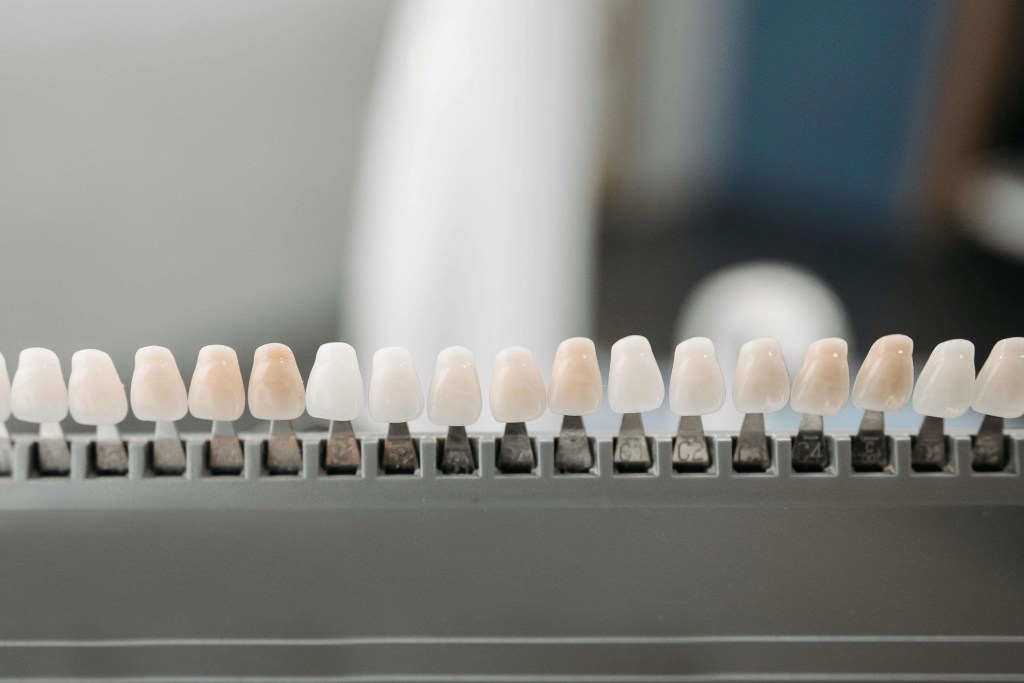
How Whitening Agents Work
Teeth whitening products rely on peroxides as these molecules are able to penetrate the enamel and break apart the pigmented molecules into colourless compounds. The result? A whiter, brighter appearance.
So there are two main approaches:
- Bleaching (oxidative agents): Uses peroxides (hydrogen peroxide and carbamide peroxide) to change the color of the tooth by breaking down stains at the molecular level.
- Non-bleaching (abrasive agents): Uses physical or chemical action to remove surface stains, like in whitening toothpaste or other over-the-counter products.
Types of Whitening Treatments
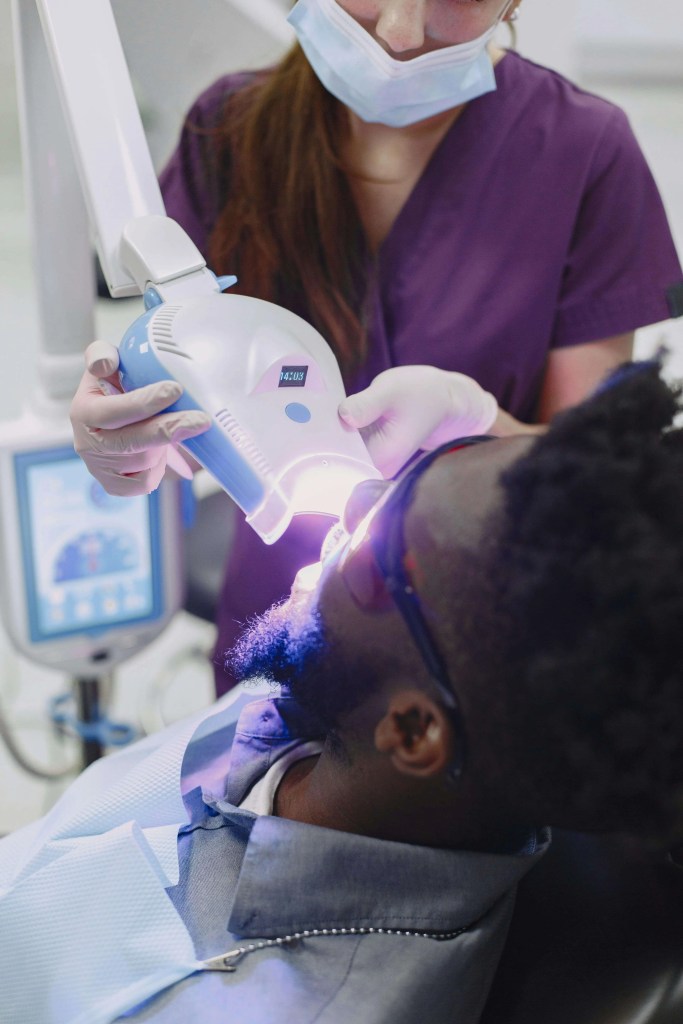
There are several ways to whiten your teeth, depending on your needs and budget:
Whitening Toothpaste and Rinses: Good for maintenance or mild surface stains but won’t change your natural tooth colour.
- In-Office Whitening: Performed by dental professionals using high-concentration bleaching agents.
- At-Home Kits (prescribed): Custom-fitted trays and lower-strength bleaching gels you use over several days.
- Over-the-Counter Products: Strips, gels, or trays available in stores. These are less potent but convenient.
Is Teeth Whitening Safe?
Yes, when used as directed. However, overuse or misuse of whitening products can cause tooth sensitivity or enamel damage. Always consult your dentist before beginning any whitening treatment, especially if you have dental restorations or existing dental issues.
Since hypersensitivity is a common side effect after whitening, check out our article “Why Do I Have Sensitive Teeth?” to learn how to manage it effectively.
Final Thoughts
Teeth whitening works by using active agents to remove or bleach stains, revealing a whiter smile. Whether you go for a professional treatment or an at-home product, understanding how these methods work helps you make the best choice for your dental health and aesthetic goals.

REFERENCE
- Fioresta, R., Melo, M., Forner, L., & Sanz, J. L. (2023). Prognosis in home dental bleaching: A systematic review. Clinical Oral Investigations, 27(6), 3347–3361. https://doi.org/10.1007/s00784-023-05069-0
- Zhao, X., Pan, J., Malmstrom, H., & Ren, Y. (2023). Treatment durations and whitening outcomes of different tooth whitening systems. Medicina, 59(6), 1130. https://doi.org/10.3390/medicina59061130

 Béal - Oral Care
Leave a Comment